1970s
Assistant Director of Community Development, Village of Tarrytown
Municipal government on the Hudson — the first desk, and the first files. He was
doing community development a decade before the federal job made it a career.
1977
Enters federal service
Counted back from his retirement award, which credits him with forty-six years of
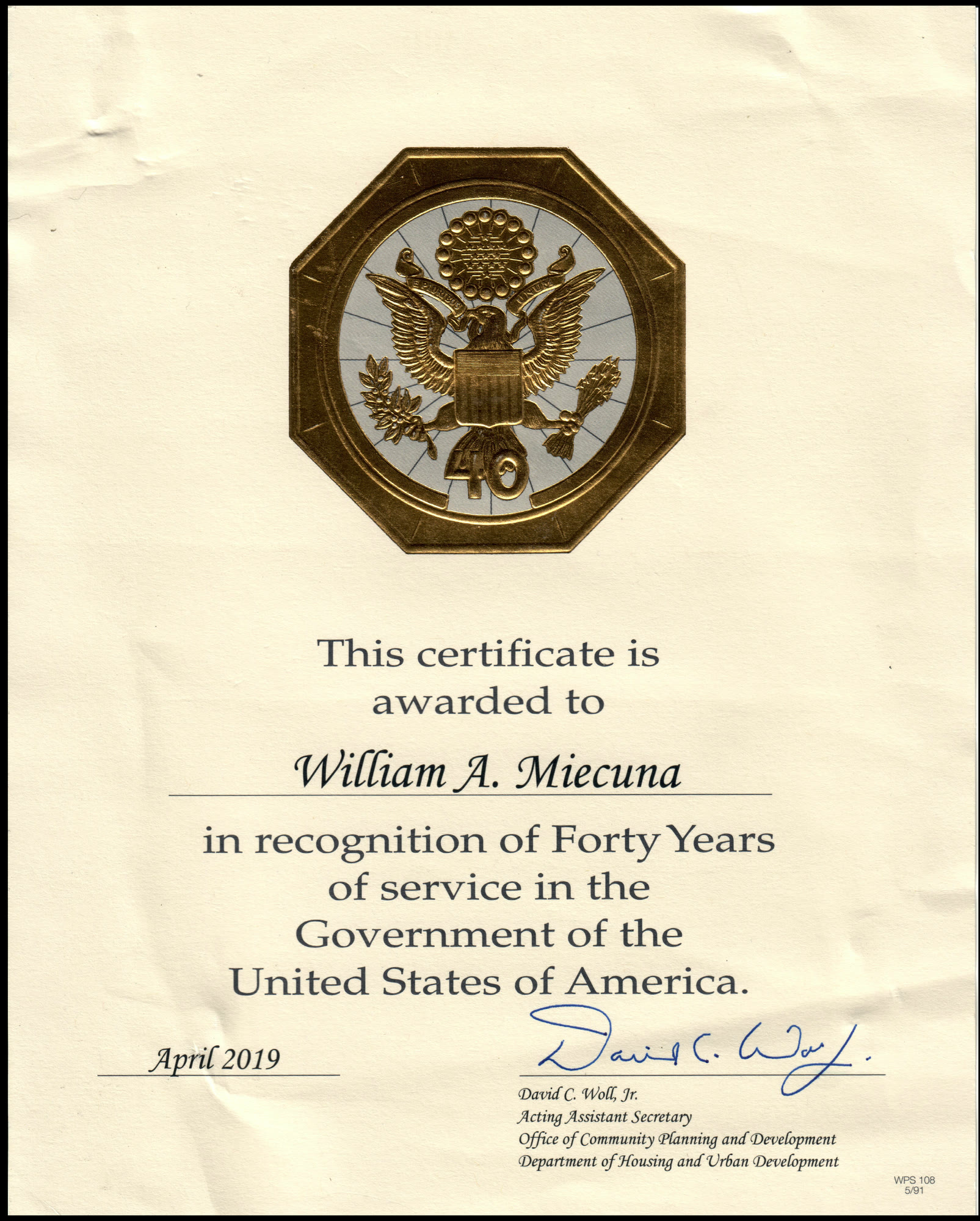
service on December 30, 2023. His 1979-dated forty-year certificate from 2019 counts
two years fewer — service-computation dates and award milestones don’t always
agree. Both documents are in the archive.
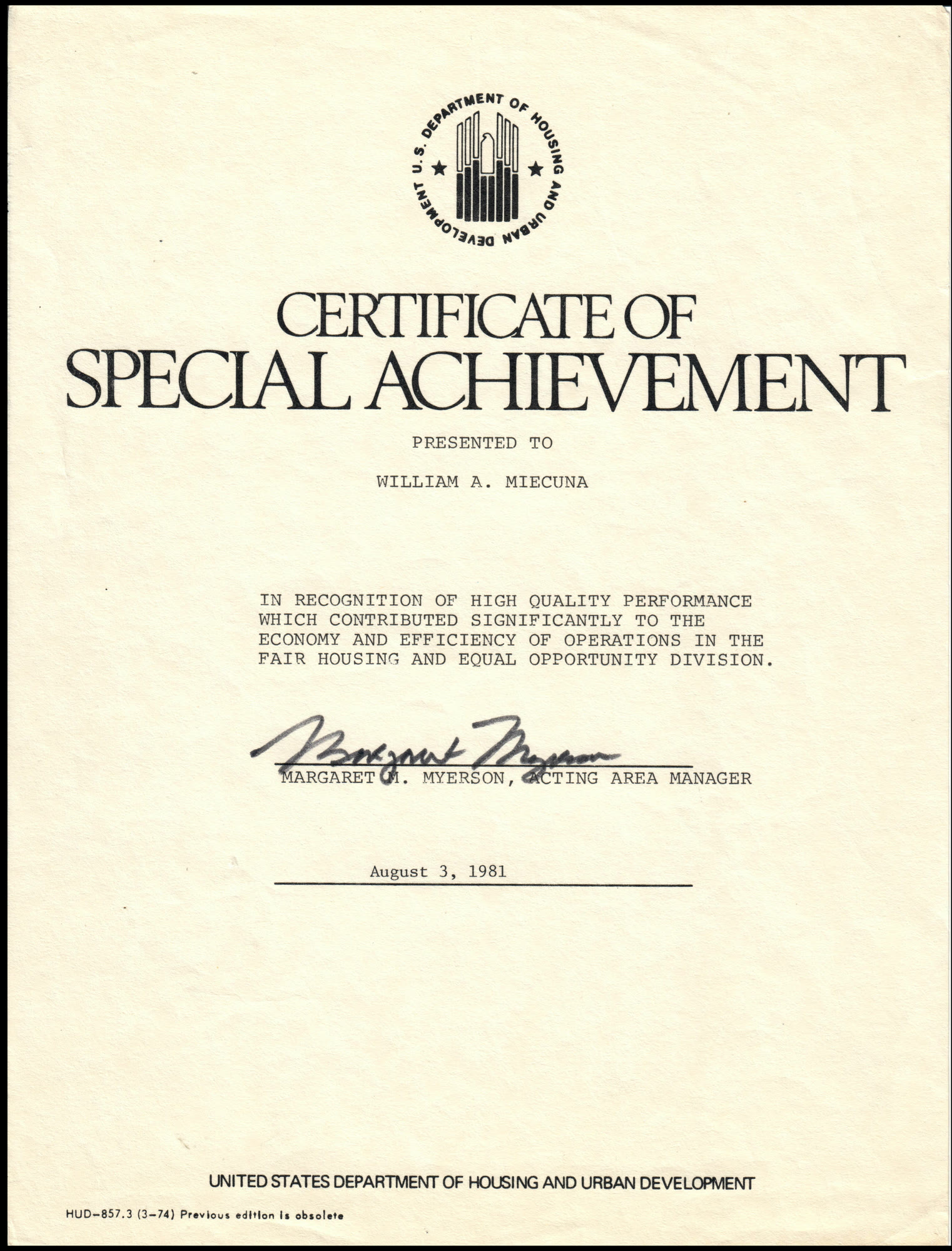
1981 · August 3
Certificate of Special Achievement
For high quality performance which contributed significantly to the economy and
efficiency of operations in the Fair Housing and Equal Opportunity Division. The
earliest award in the folder.
U.S. Department of Housing and Urban Development
1985 · May 7
Certificate of Special Achievement
Substantially exceeded normal job requirements in one or more of the most important
job elements during fiscal year 1985.
Joseph D. Monticciolo, Regional Administrator / Regional Housing Commissioner
1987 · July 21
Resolution of the Village of Greenport
Greenport, Suffolk County. The board went on record that its safe and affordable housing programs “could not have been established nor could they be functioning” without his insight, support, advice and encouragement.
Village of Greenport Board of Trustees
1988
Huntington Branch, NAACP v. Town of Huntington
His testimony is recorded in the Second Circuit’s opinion in a landmark fair housing
case: HUD had determined that the proposed Huntington Station site sat in an area of high
minority concentration and was therefore an inappropriate location for federally
subsidised housing. The Court of Appeals held that a Title VIII plaintiff need only show
discriminatory impact; the Supreme Court affirmed later that year.
844 F.2d 926 (2d Cir. 1988), aff’d 488 U.S. 15 (1988)
1988 · June 29
High Technology Innovators Award
For developing a PC application which resulted in saved staff hours and improved
efficiency — the first of several awards for putting computers to work inside
the department.
Geraldine McGann, Acting Regional Administrator
1991 · September 6
Honorary member, Entitlement Communities Division
A joke certificate from his colleagues, printed and sealed in earnest: for his
“infectious enthusiasm and boyish charm,” the Court deems him forever an
honorary member of the division, his participation in all social functions
“determined to be an eligible activity.” It entitles the bearer to one free
waiver of the CDBG Regulation of his choice.
Signed and sealed by the Entitlement Communities Division
1992 · March 22
Certificate of Recognition — CDBG
For extraordinary effort and superior achievement in assessing the administrative
requirements of the Community Development Block Grant program.
U.S. Department of Housing and Urban Development
1996
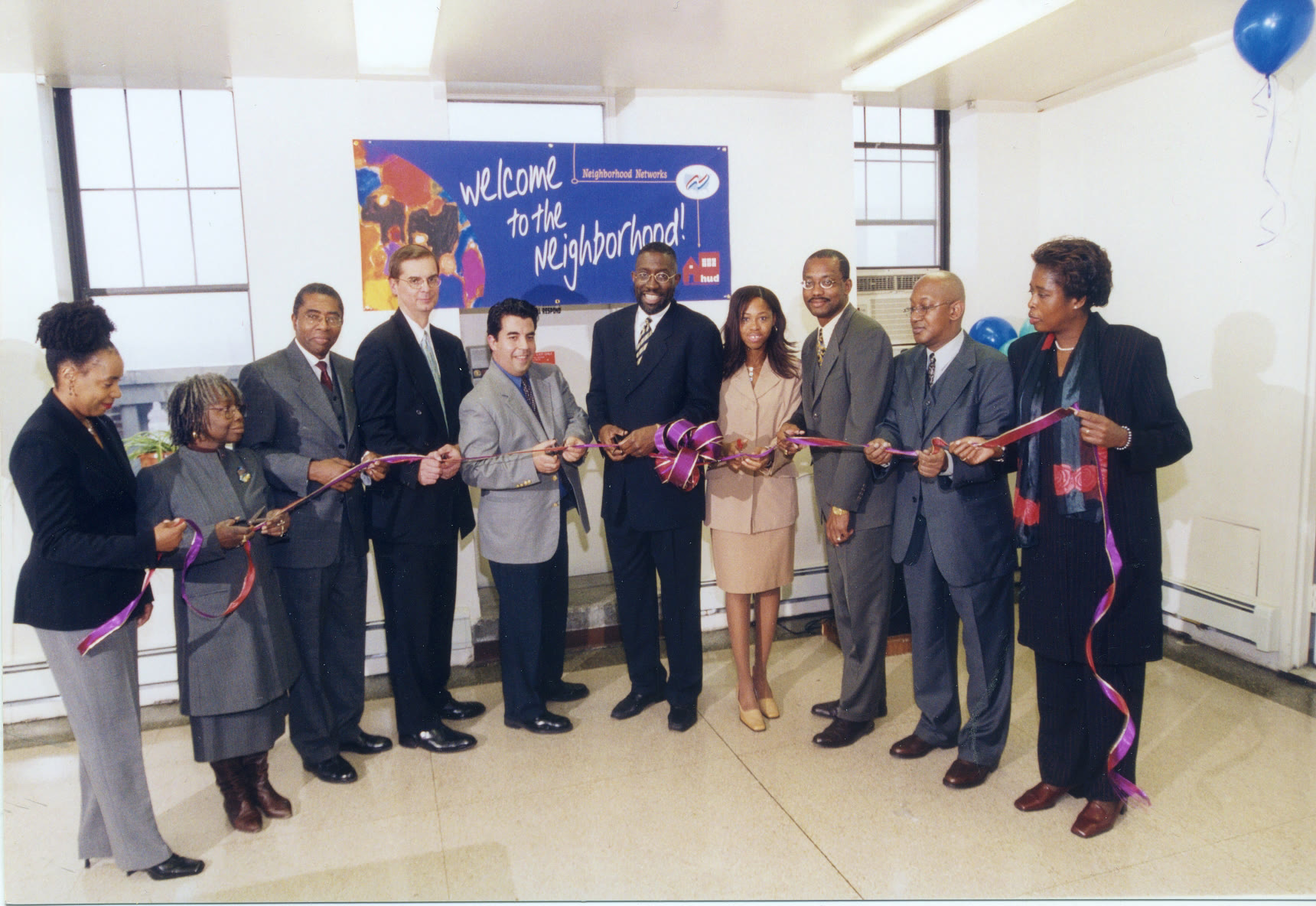
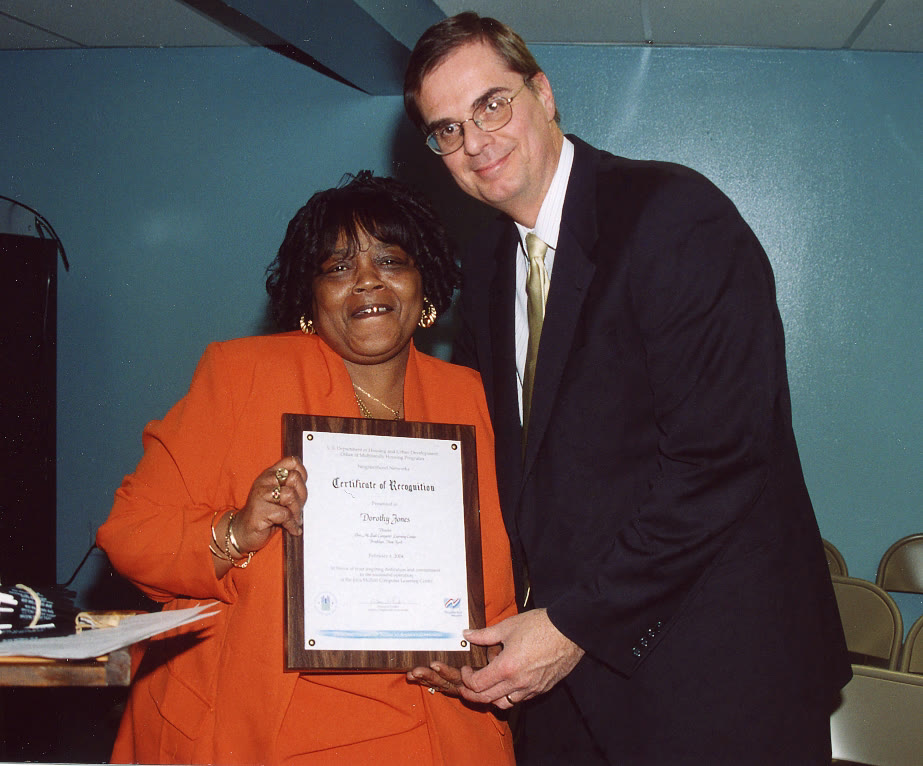
The first Neighborhood Network in New York
The Elva McZeal computer learning centre opened in Brooklyn — the first Neighborhood
Network in HUD’s New York jurisdiction — founded and run by Dorothy Jones,
president of the tenants’ association. He filmed its eighteenth graduation in 2002,
nominated her for departmental recognition, and spoke at its twentieth commencement in
January 2004.
HUD New York “Good Stories,” February 6, 2004
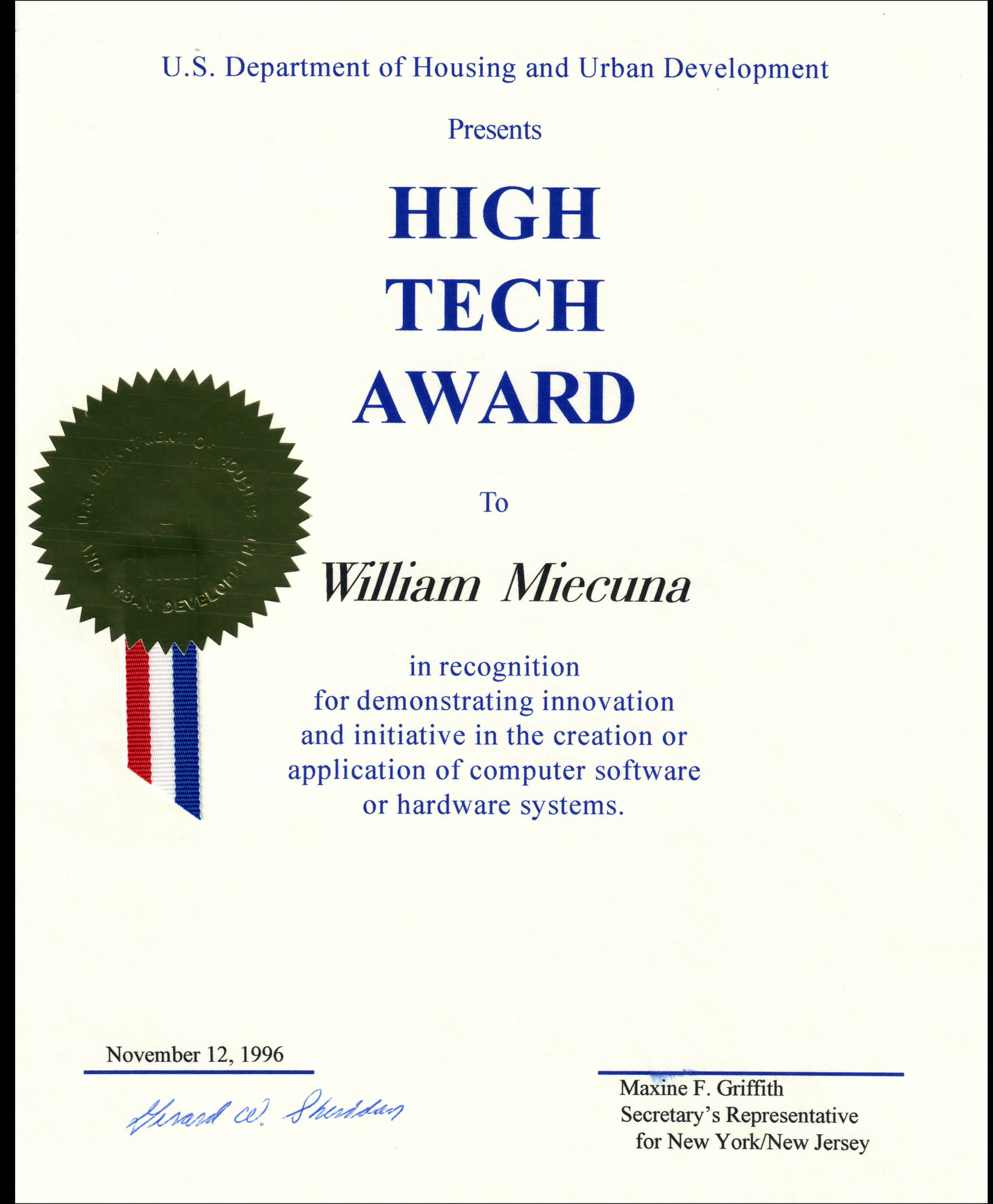
1996 · November 12
High Tech Award
For demonstrating innovation and initiative in the creation or application of computer
software or hardware systems.
Maxine F. Griffith, Secretary’s Representative for New York / New Jersey
1997 · February 21
Certificate of Appreciation
For extraordinary cooperation, consideration, and assistance to our Division.
Multifamily Housing Division, HUD Newark Office
1999 · December 27
Certificate of Appreciation — Neighborhood Networks
For supporting the Neighborhood Networks mission: “To create vibrant communities that
foster life-long learning and economic opportunity.”
National Field Director, Neighborhood Networks
2000 · February 20–25
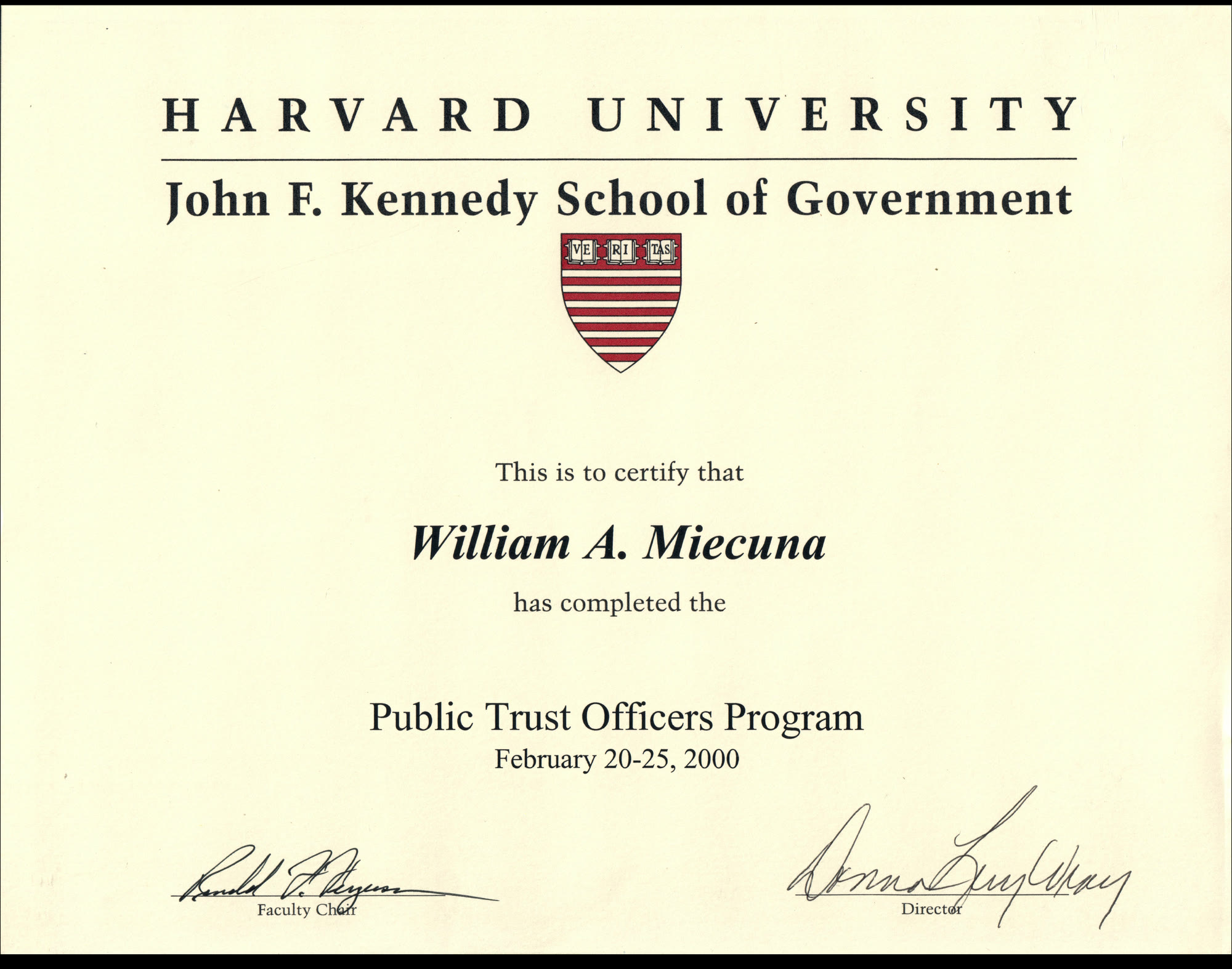
Harvard Kennedy School — Public Trust Officers Program
Completed the executive program at the John F. Kennedy School of Government.
Harvard University
2001 · December
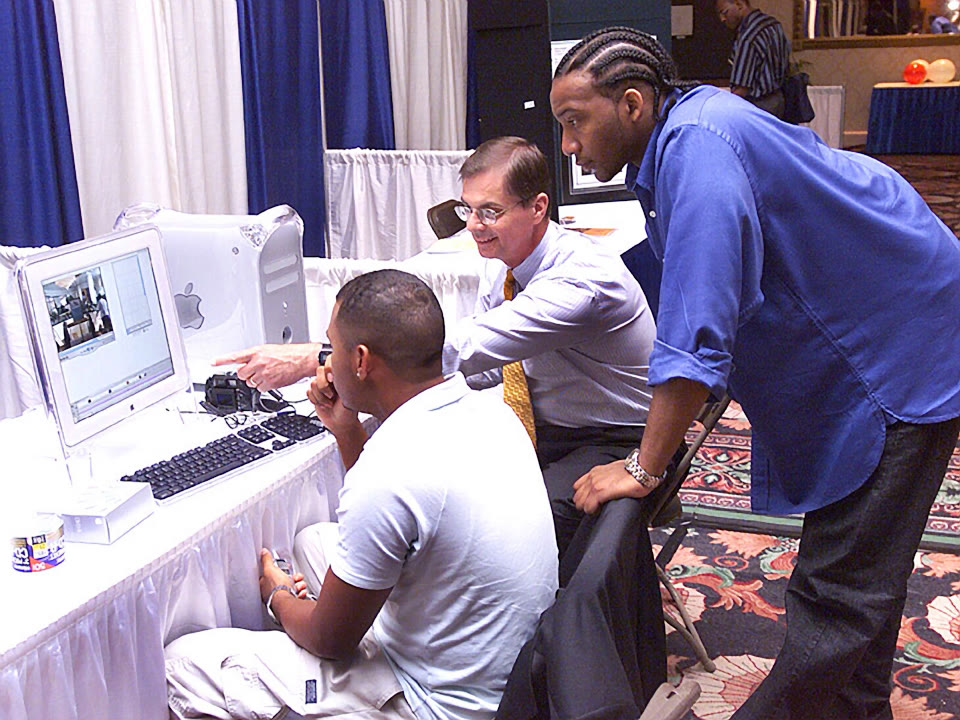
The Magic Johnson Foundation partnership
Filmed across two visits in December 2001 and January 2002, including the reception at Taino Towers.
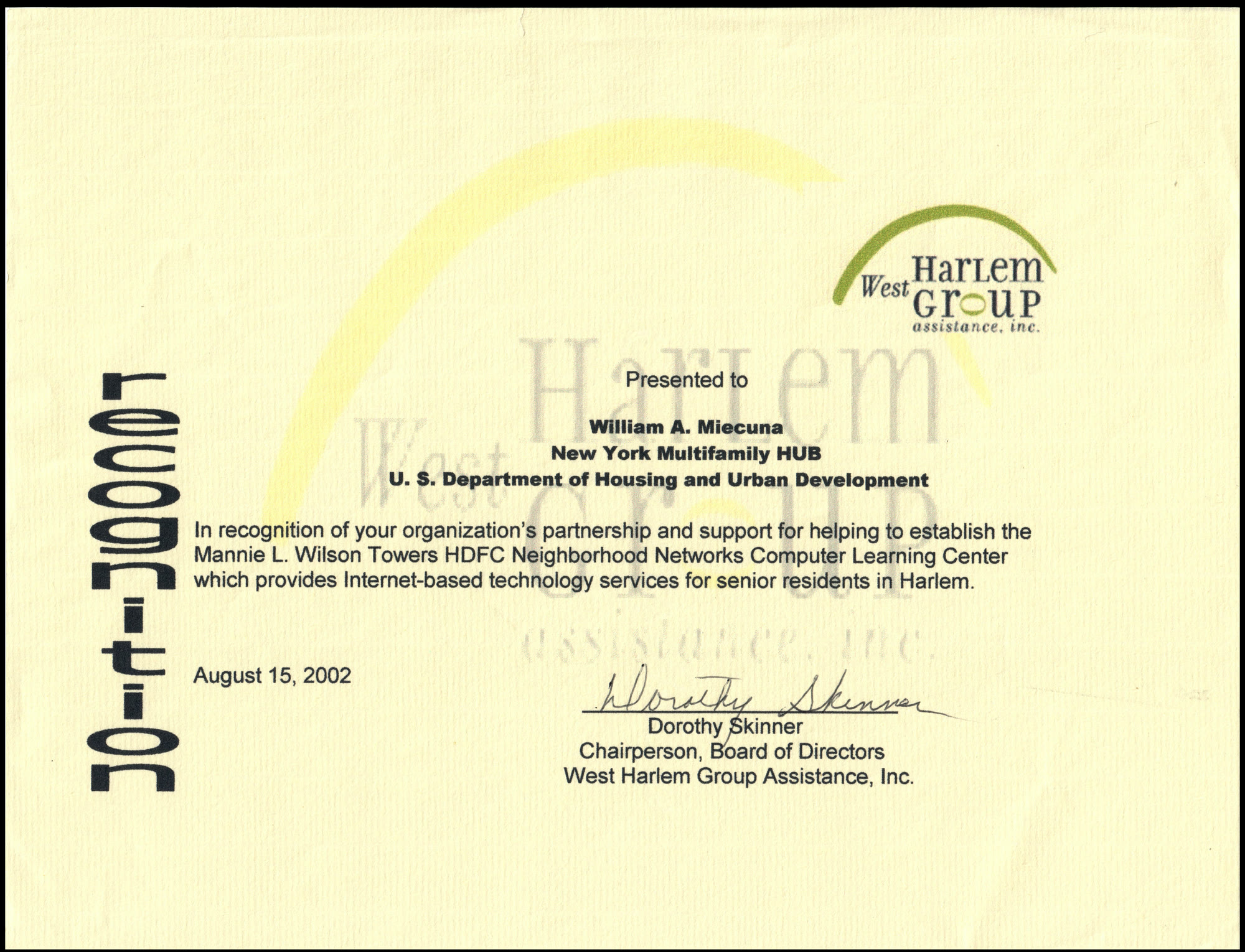
2002 · August 15
West Harlem Group Assistance recognition
For helping establish the Mamie L. Wilson Towers HDFC Neighborhood Networks Computer
Learning Center, providing internet-based technology services for senior residents in Harlem.
West Harlem Group Assistance, Inc.
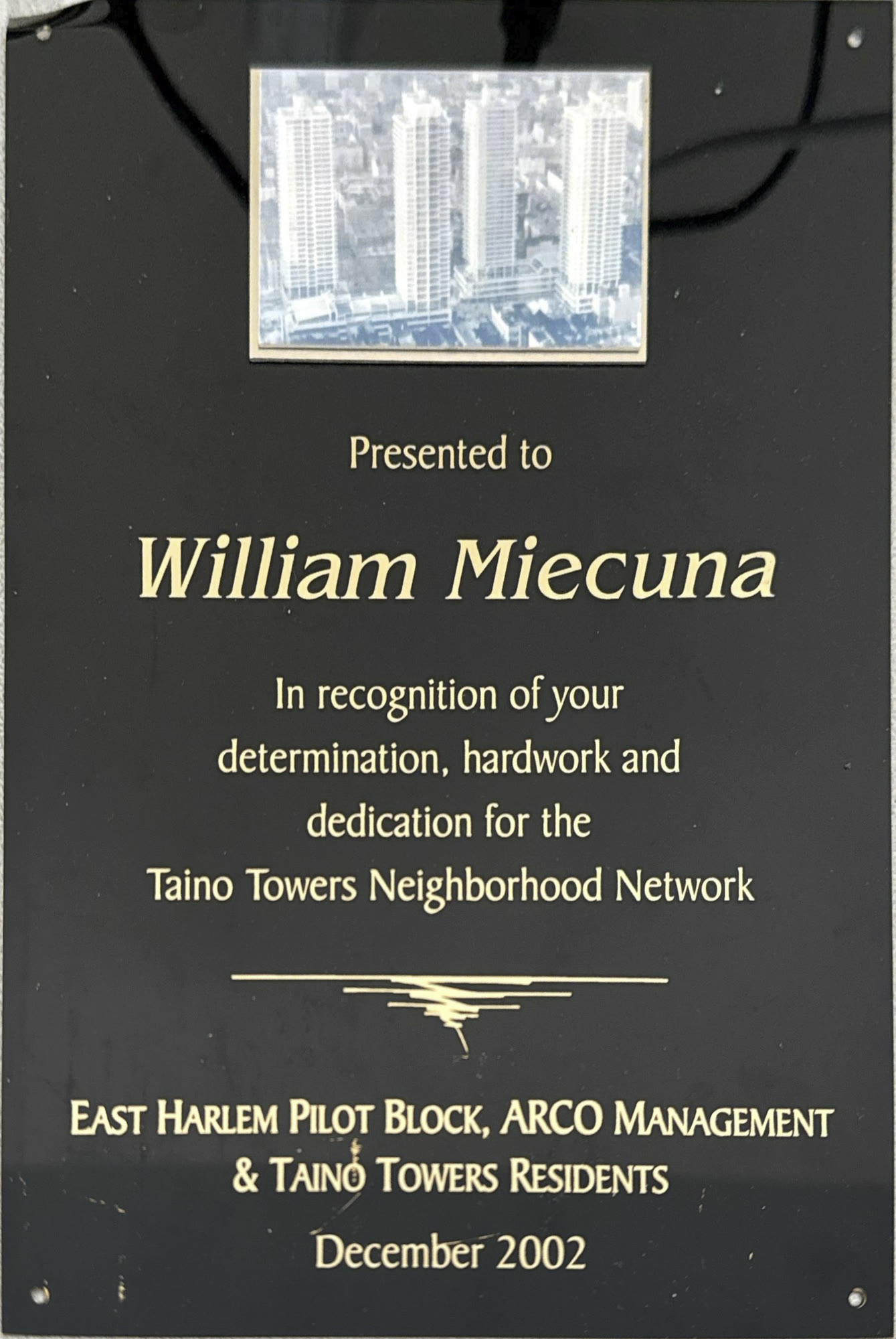
2002 · December
Taino Towers Neighborhood Network
In recognition of your determination, hard work and dedication.
East Harlem Pilot Block, ARCO Management & Taino Towers Residents
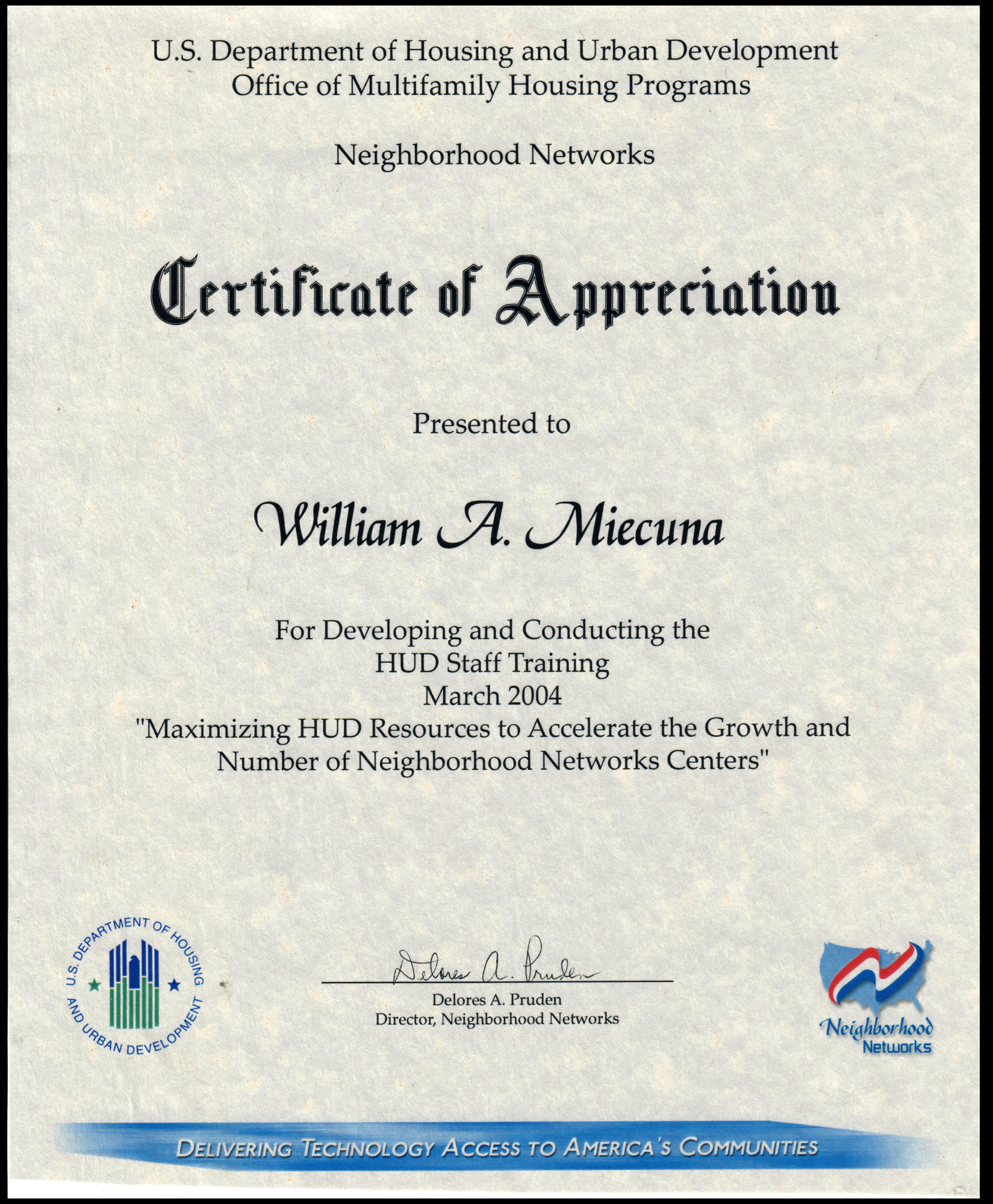
2004 · March
HUD Staff Training — developed and conducted
“Maximizing HUD Resources to Accelerate the Growth and Number of Neighborhood
Networks Centers.”
Office of Multifamily Housing Programs
2005 · June
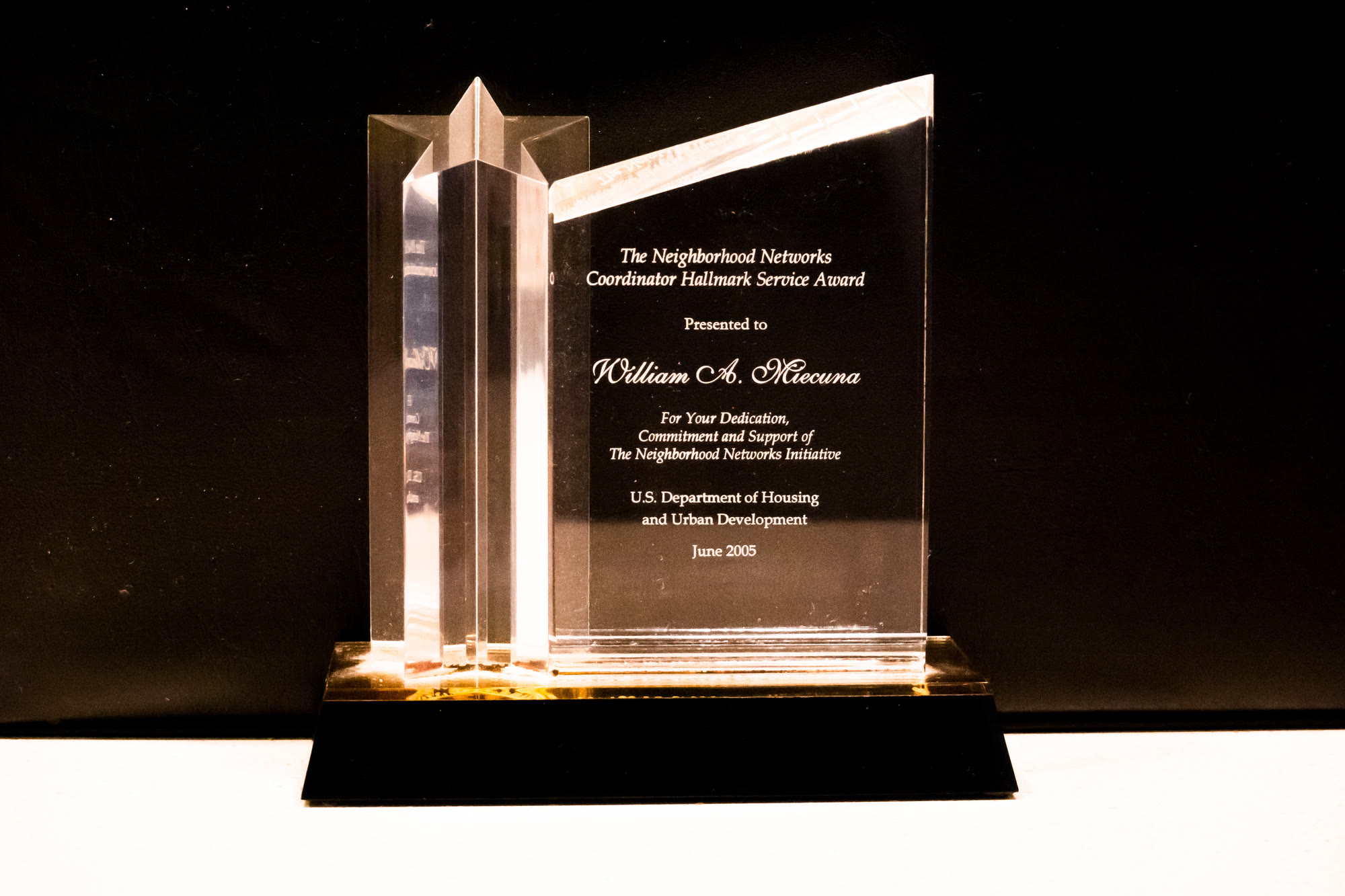
Neighborhood Networks Coordinator Hallmark Service Award
For your dedication, commitment and support of the Neighborhood Networks initiative.
Presented at the 10th Anniversary National Training Conference, Lake Buena Vista, Florida.
U.S. Department of Housing and Urban Development
2005 · October
National Conference, San Diego
His badge carries three ribbons: Presenter, Conference Committee, Award Winner.
2009
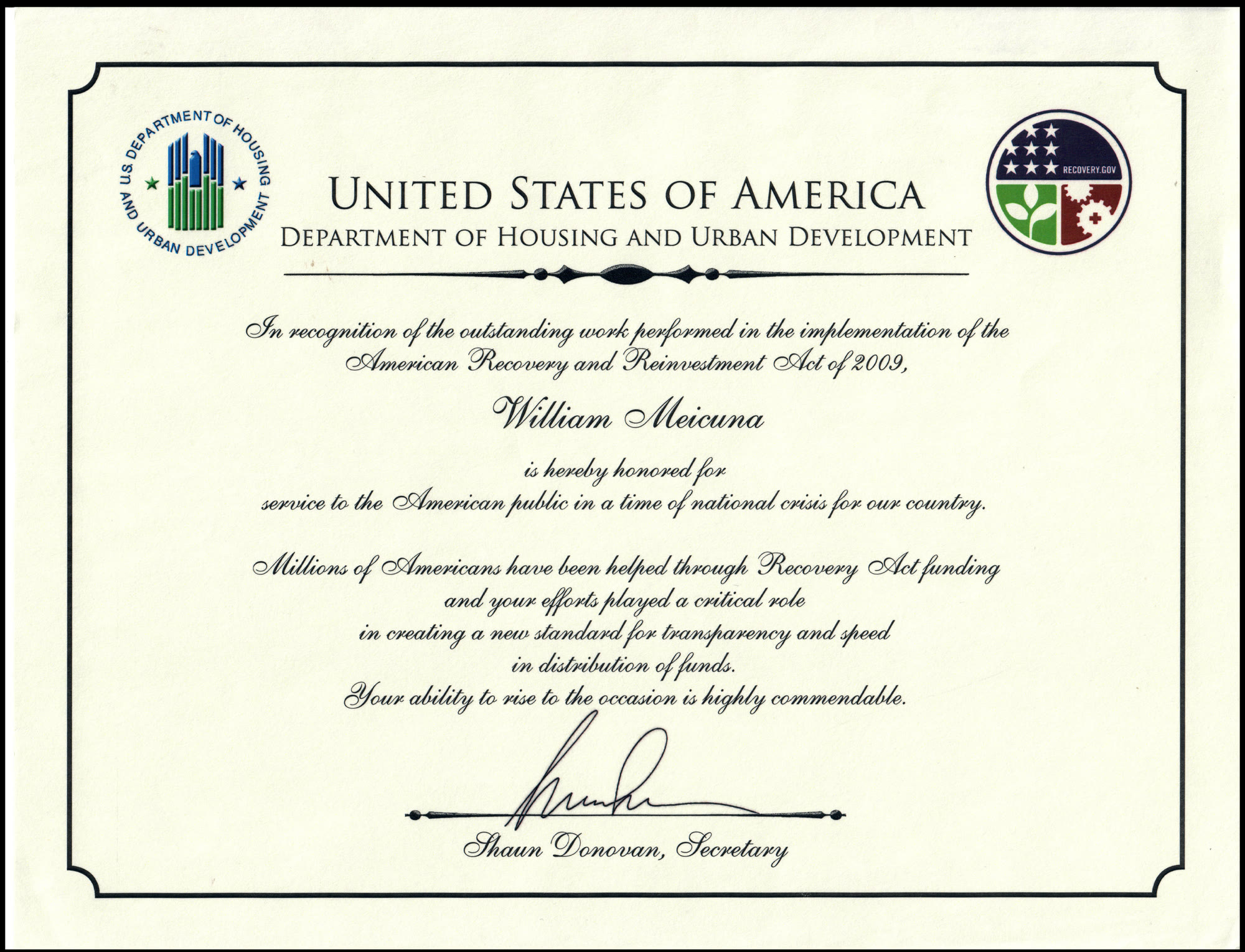
American Recovery and Reinvestment Act
Honored for service to the American public in a time of national crisis —
“your efforts played a critical role in creating a new standard for transparency and
speed in distribution of funds.”
Shaun Donovan, Secretary of Housing and Urban Development
—
Office of Community Planning and Development
A handwritten note in the folder: “In recognition of your hard work and commitment to
the mission of CPD. Thank you.”
Mercedes Márquez, Assistant Secretary
2010 · April 9
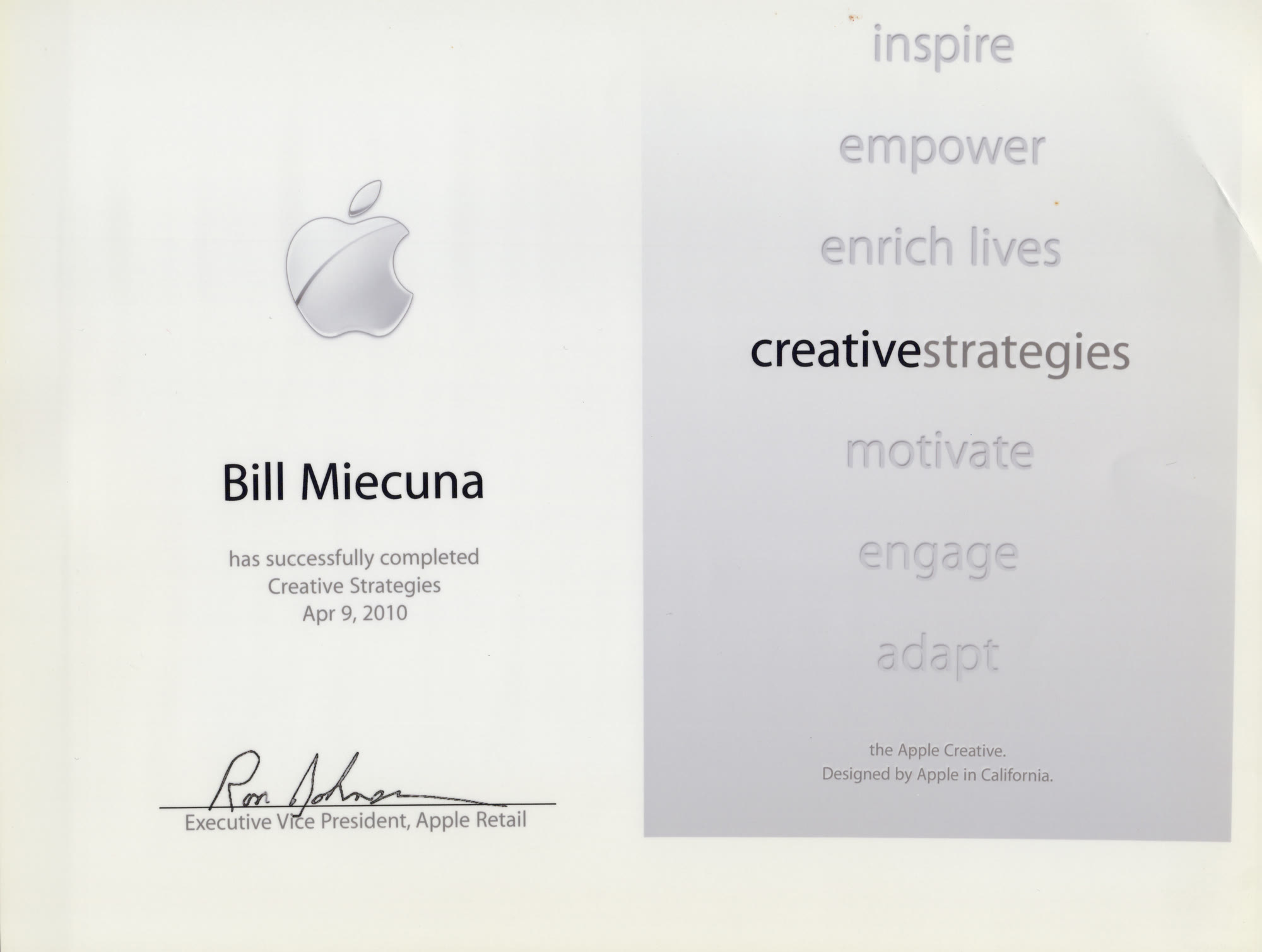
Apple Retail — Creative Strategies
Alongside the federal job he had by then held for more than thirty years, he worked at
Apple Retail. This certificate marks the Creative Strategies programme and lists the
Apple Creative: inspire, empower, enrich lives, motivate, engage, adapt.
Signed by Ron Johnson, Executive Vice President, Apple Retail
—
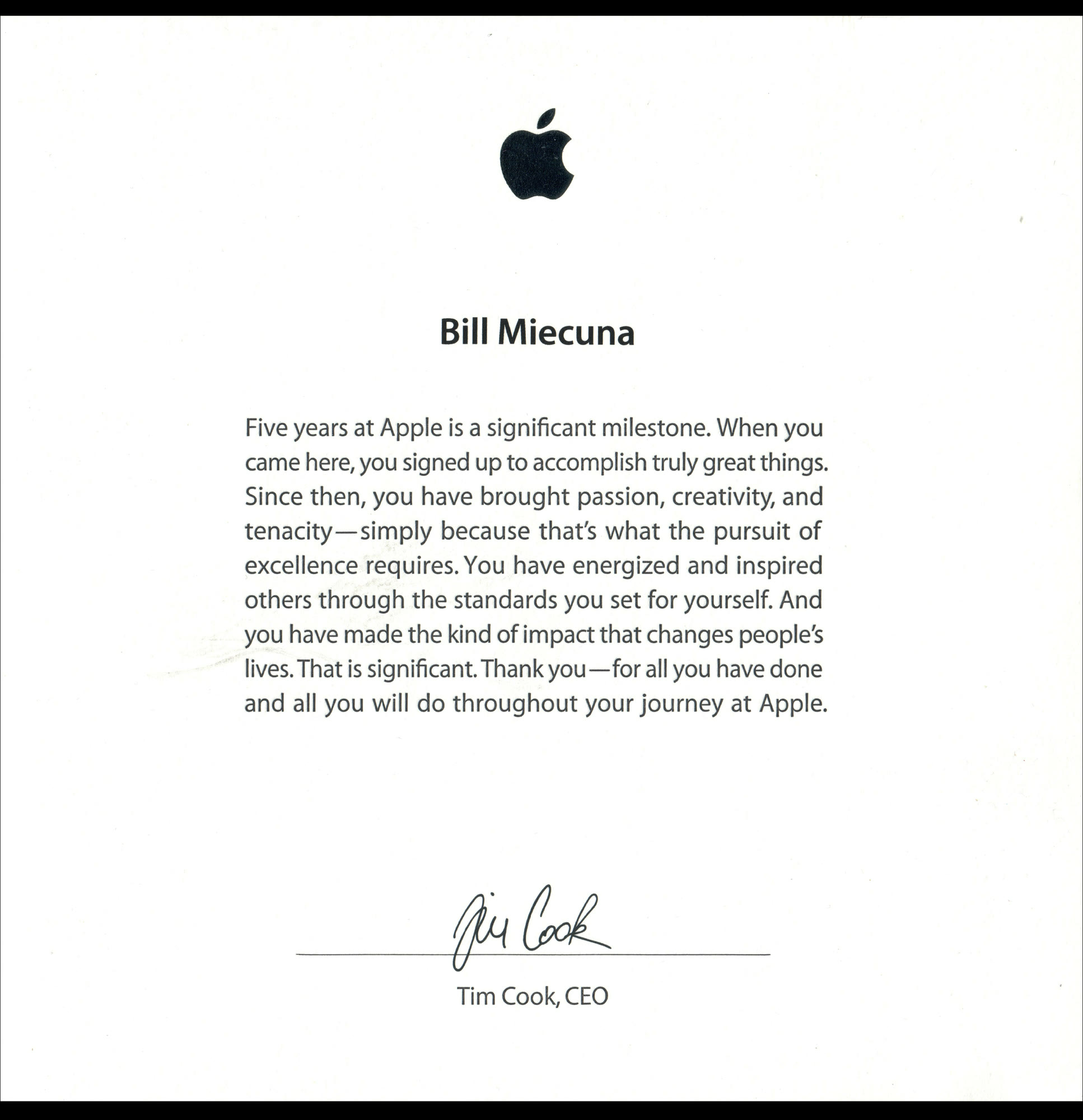
Five years at Apple
“You have brought passion, creativity, and tenacity — simply because that’s
what the pursuit of excellence requires… you have made the kind of impact that
changes people’s lives.”
Tim Cook, Chief Executive Officer, Apple
2019 · April
Forty Years of Service
In recognition of forty years of service in the Government of the United States of America.
Office of Community Planning and Development, HUD
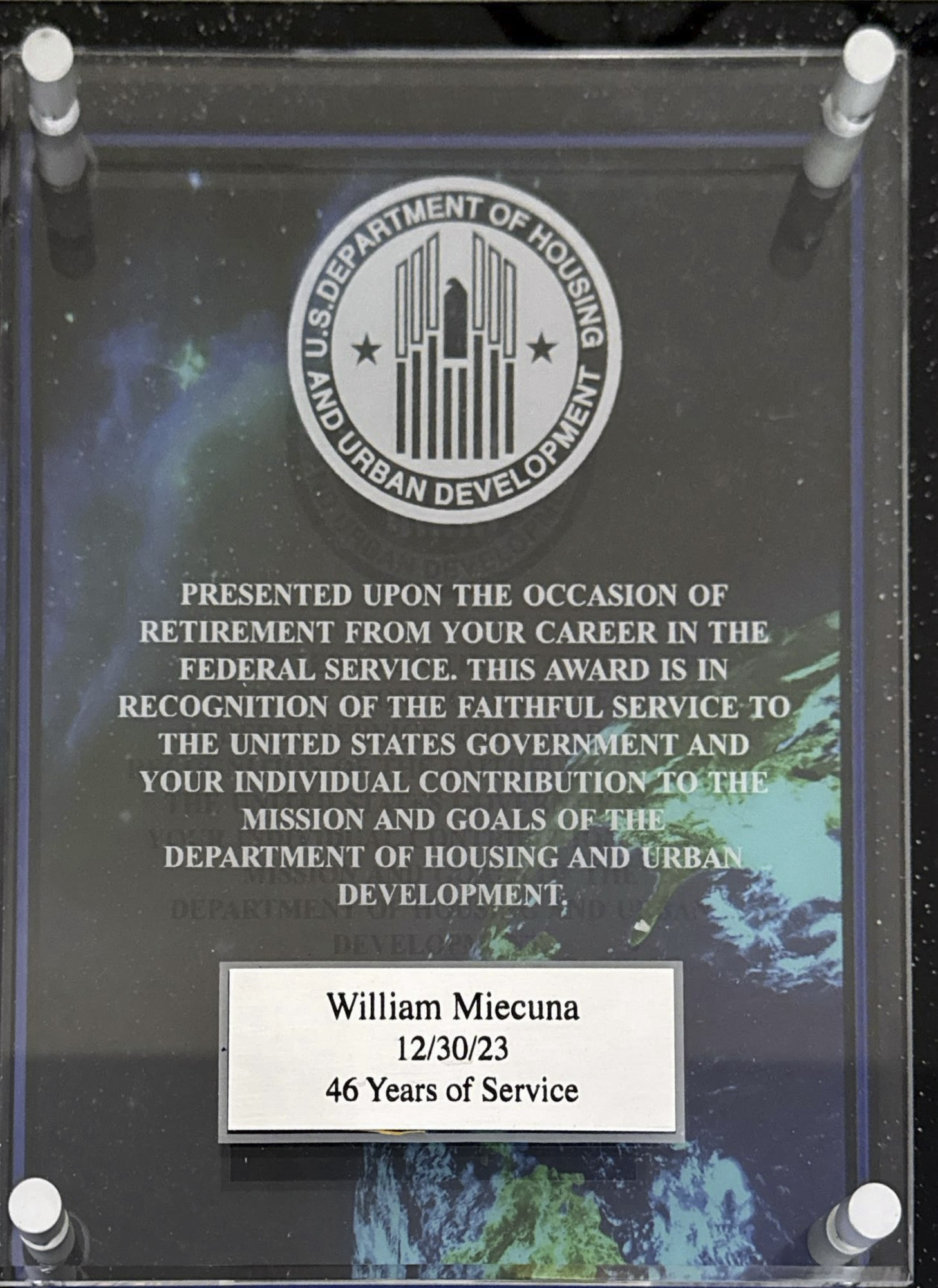
2023 · December 30
Retirement — forty-six years of service
“Presented upon the occasion of retirement from your career in the federal service.
This award is in recognition of the faithful service to the United States Government and
your individual contribution to the mission and goals of the Department of Housing and
Urban Development.”
His retirement award: William Miecuna · 12/30/23 · 46 Years of Service